Bea Better Eating: Building from Scratch Case Study
From Zero to Launch: designing an AI-powered emotional-eating therapy app built to scale BEFORE OpenAI was available for public use.
Bea Better Eating was created to move beyond diet culture — offering compassionate, AI-powered support for emotional eating.
As product lead, I combined design thinking with clinical hypnosis and Ericksonian methodologies to build a scalable, empathetic platform that helps users understand why they eat, not just what they eat.
This case study captures Bea’s earliest stage—from foundational research through concept definition, prototyping, and validation.
PHASE 1
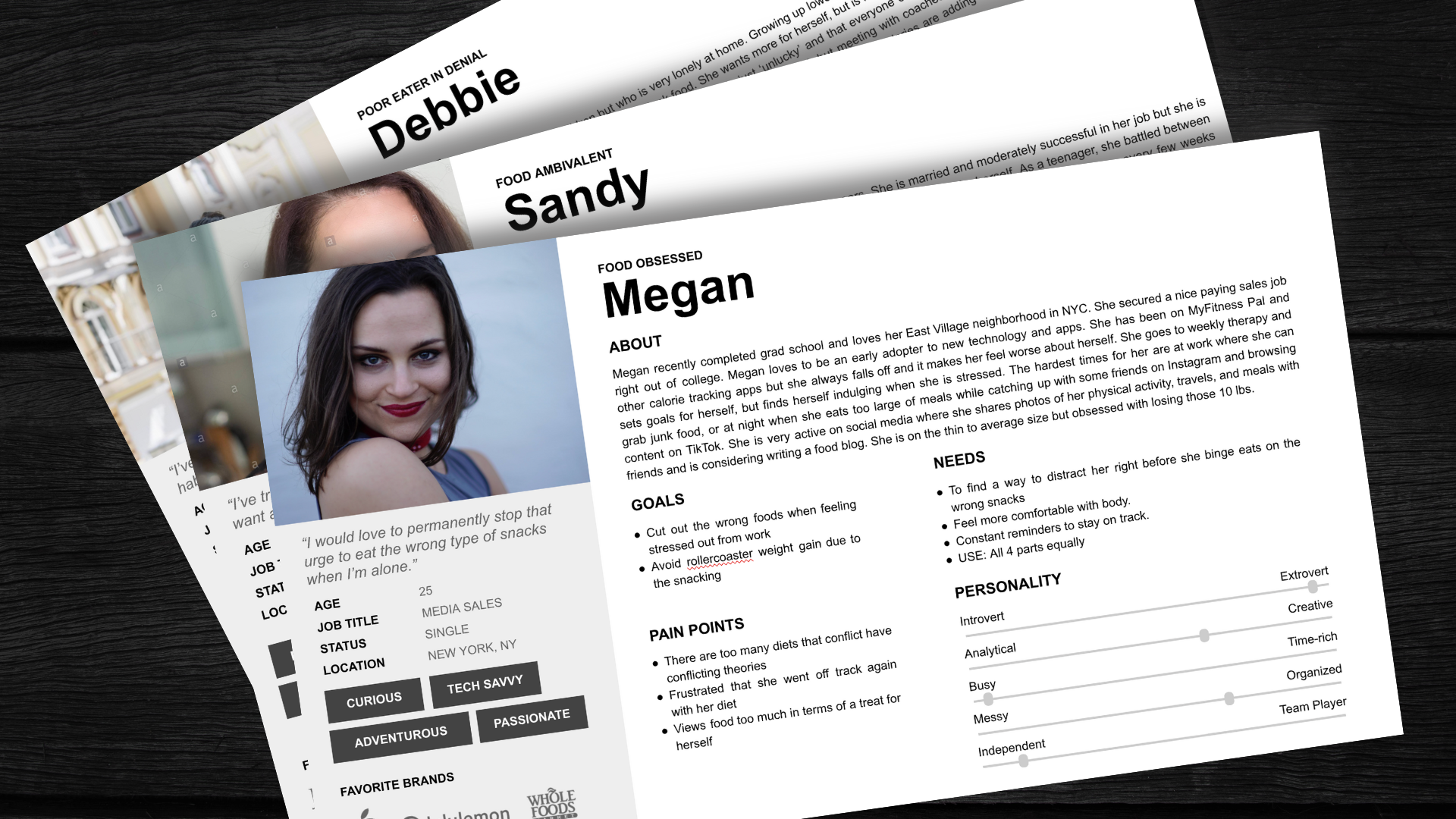
Research: Discovery & Problem Definition
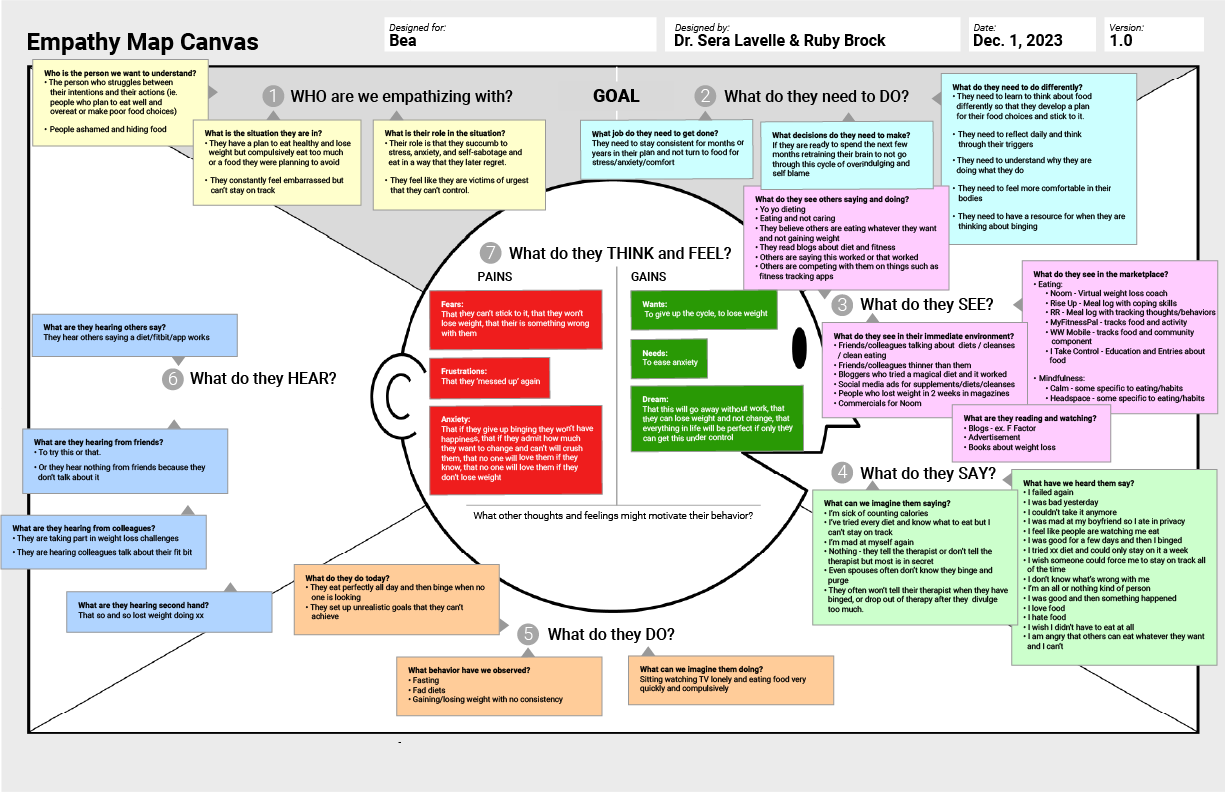
In collaboration with Dr. Sera Lavelle, I conducted empathy interviews with clinicians and individuals experiencing emotional or binge eating. Her de-identified clinical insights were invaluable, helping us identify core behavioral patterns and personality traits common in disordered eating — insights that shaped both our tone and product direction.
Diet apps felt judgmental and rigid.
Users were exhausted by willpower-based advice.
They wanted compassion, not calories.
Insights
Build a non-judgmental space that addresses emotional drivers behind eating, grounded in hypnosis and behavioral science. An accompanying Insight Dashboard will give people a better idea of trends and triggers during their lows and highs.
Core Opportunity
PHASE 2
Define: Concept & Strategy
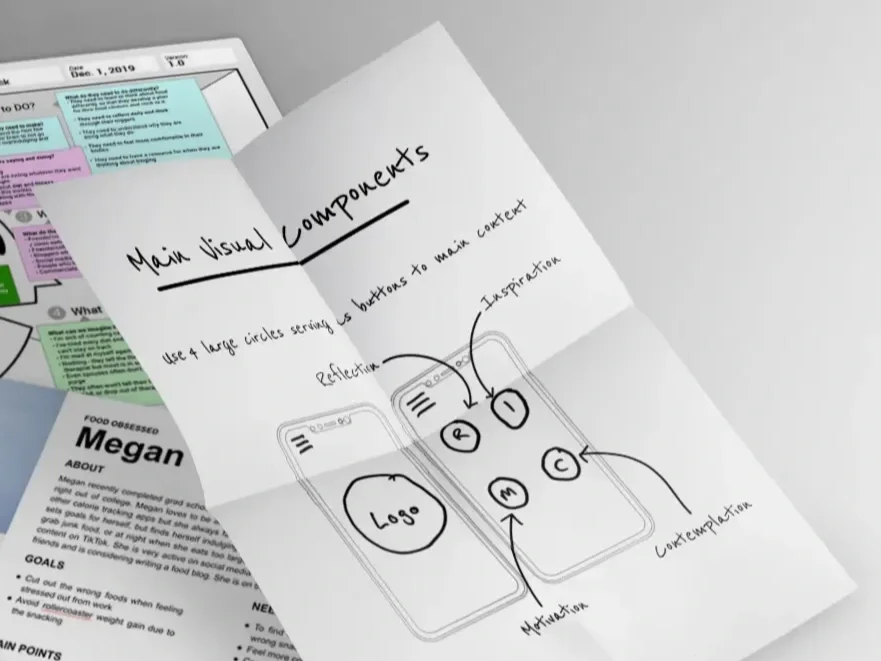
We designed Bea as a supportive companion, not a tracker—combining AI guidance, emotional safety, and small, achievable habits.
Therapeutic experiences: Grounded in Ericksonian methodology and evidence-based hypnotherapy techniques proven effective in addressing emotional eating.
Language pacing and tone: Inspired by hypnotic cadence and positive suggestion to help users access self-awareness without judgment.
Root-cause focus: Emotional triggers over calorie counting.
Safety: Trigger-free UX and filtered language to prevent harm or shame-based interactions.
Scalability: Modular feature architecture and an empathetic, consistent brand voice.
Key Pillars:
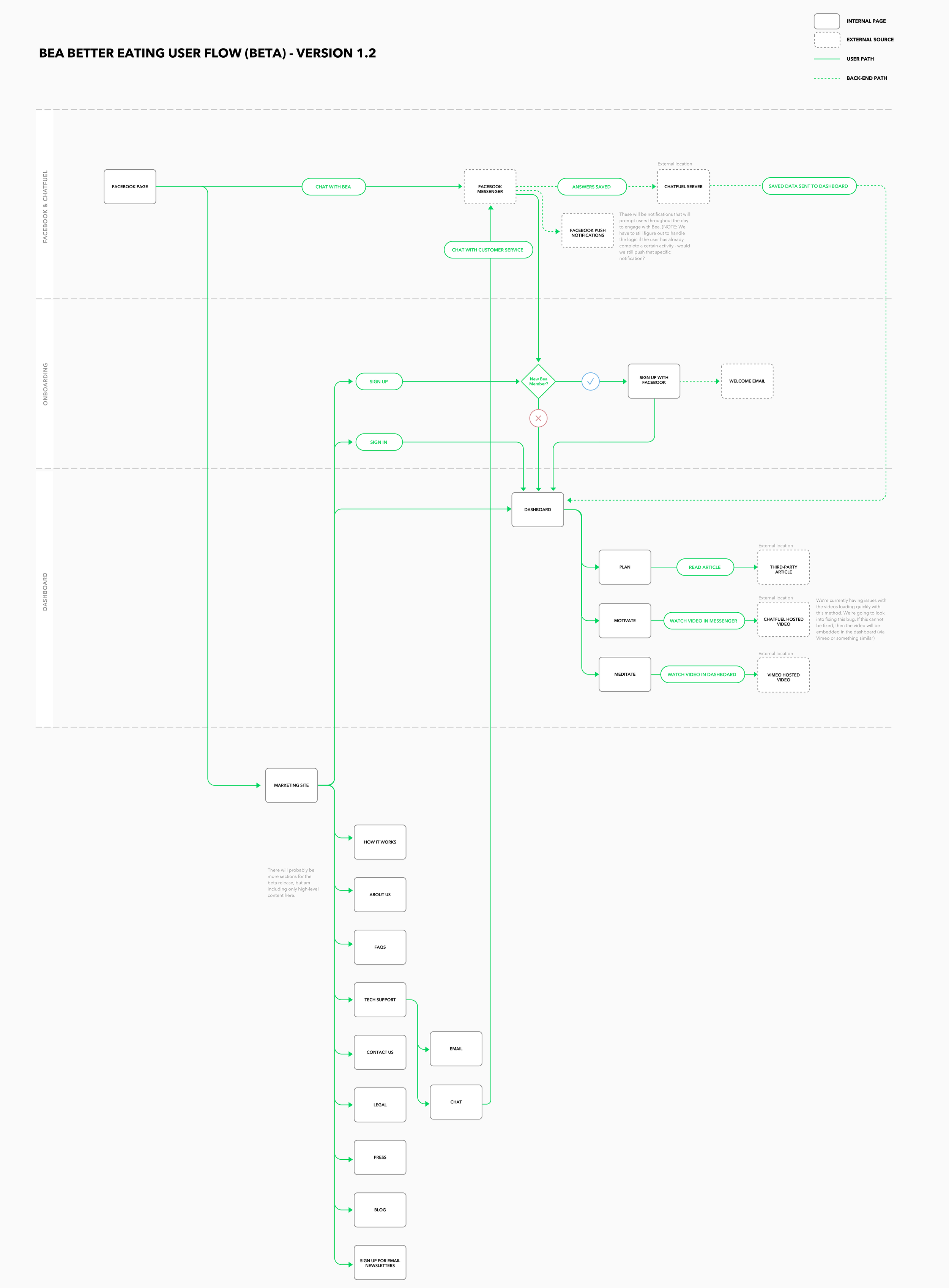
Every design and product decision was made with both clinical integrity and scalability in mind — ensuring Bea could maintain psychological safety while growing to serve diverse audiences.
PHASE 3
Design & Prototyping
With our core strategy defined, I translated Bea’s therapeutic principles into a digital experience that felt safe, empathetic, and scalable.
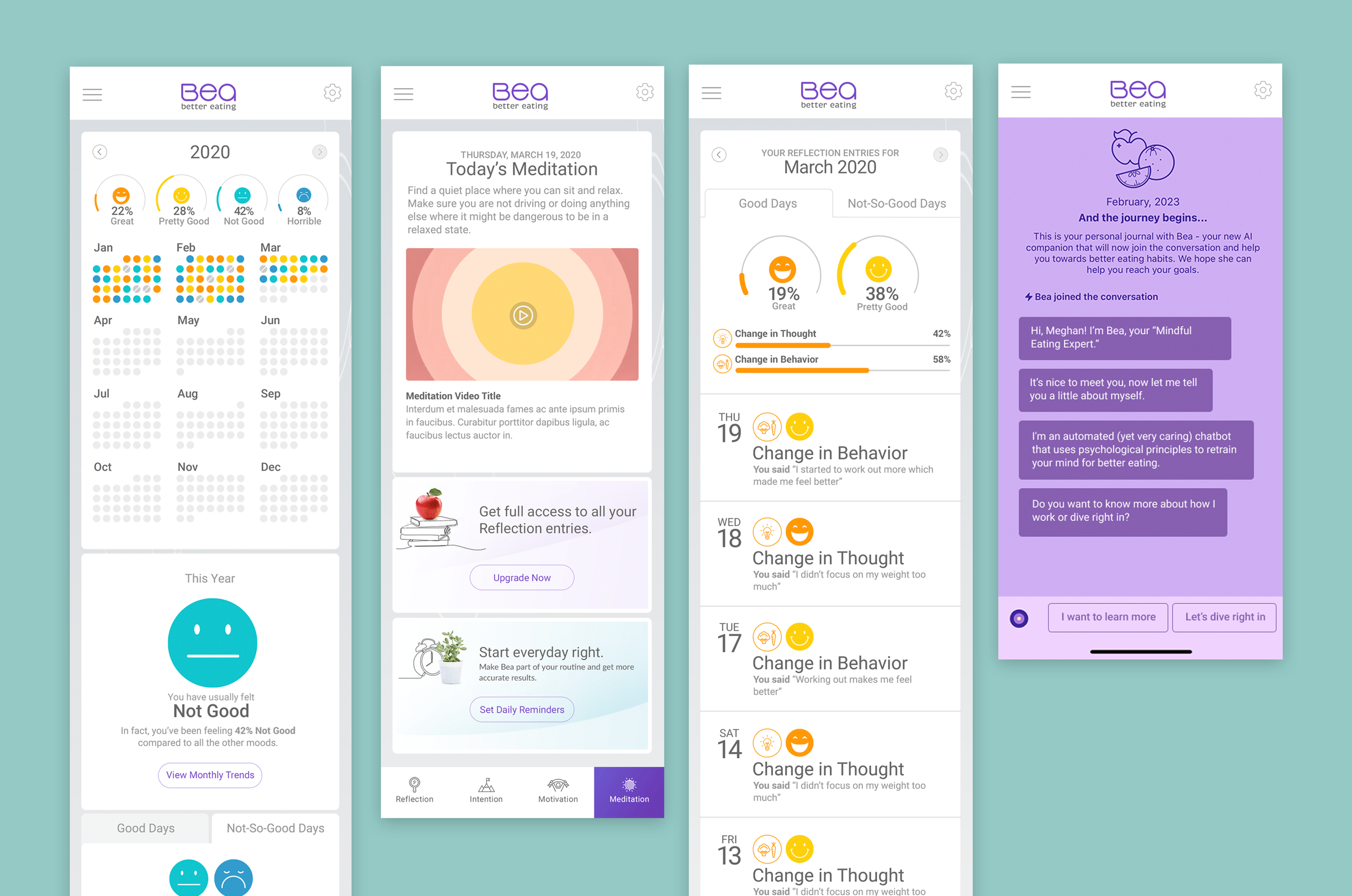
AI chat interface: Simulated empathetic, real-time conversations guiding users through Knowledge, Motivation, and Meditation activities — modeled on hypnotic pacing and Ericksonian dialogue.
Eating Insight dashboard: Explored how structured reflection could surface emotional triggers and patterns over time.
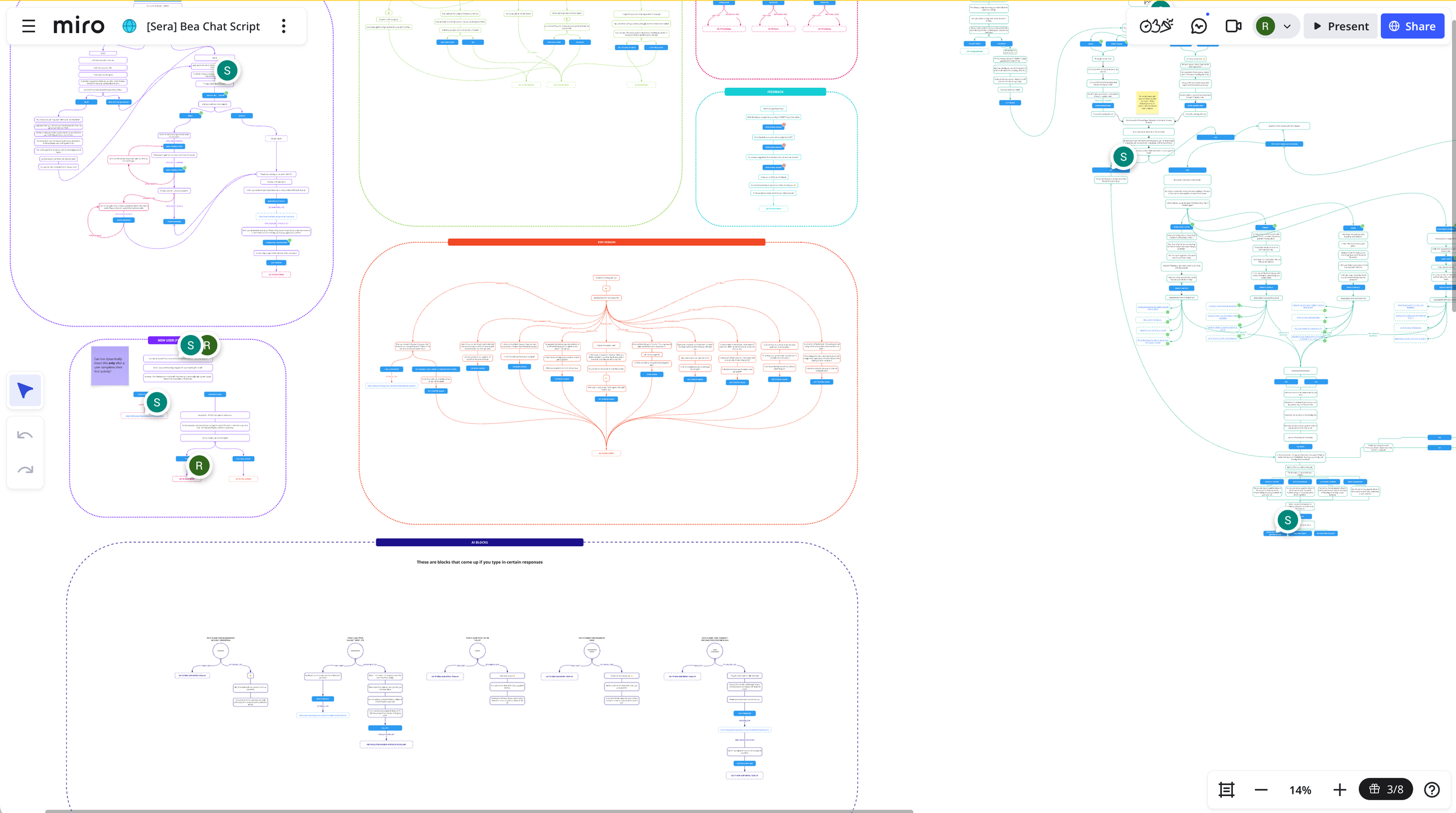
AI mind maps: Defined Bea’s personality traits, language tone, and conversational flow to ensure consistency across interactions.
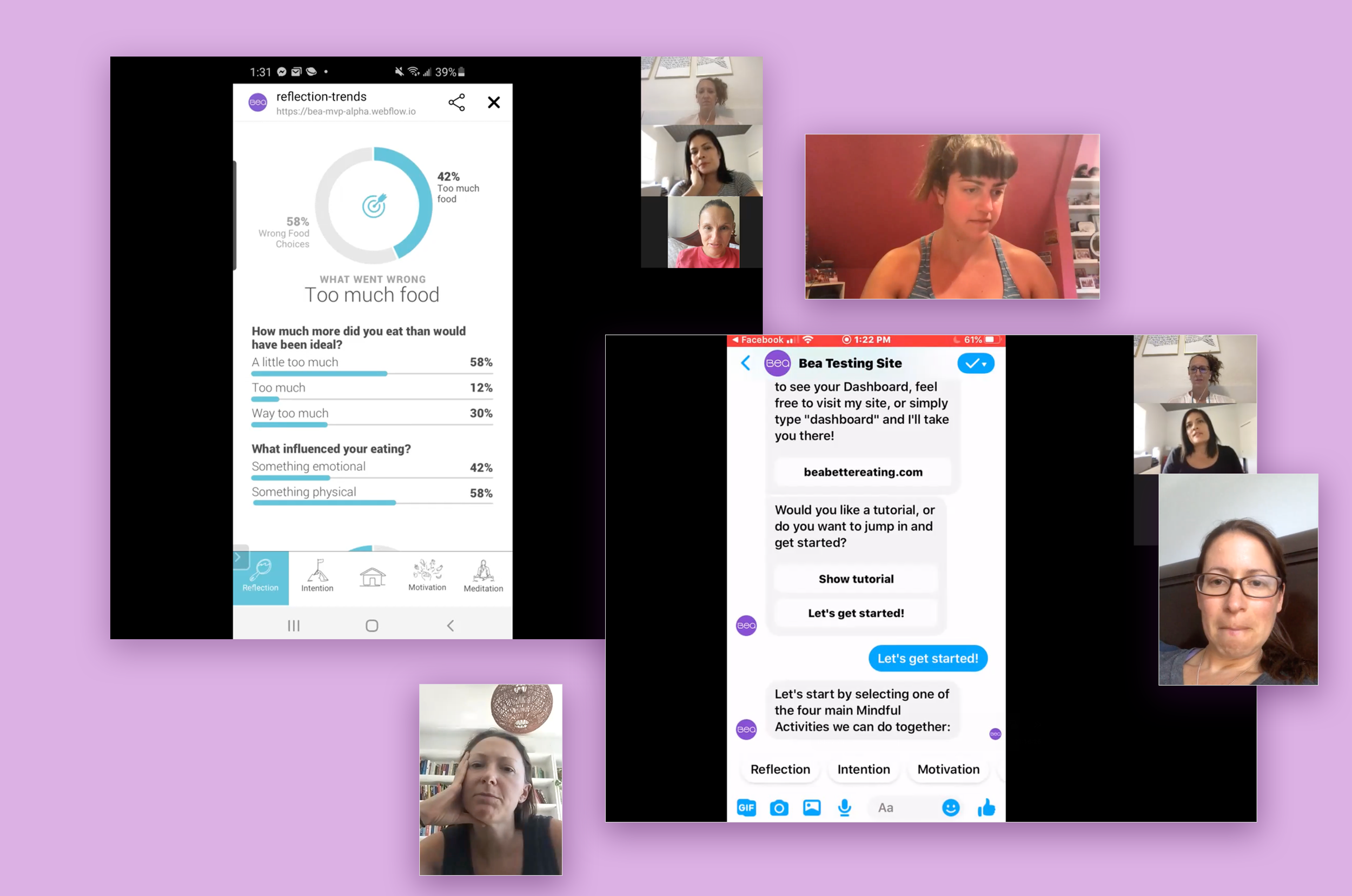
Usability testing: Validated tone, inclusivity, and overall comfort with early users drawn from research participants.
Also tested Eating Insight Dashboard and extended Bea chat flows to assess emotional trust, pacing, and clinical scalability.
Focus Areas
PHASE 4
Market Validation: Results & Learnings
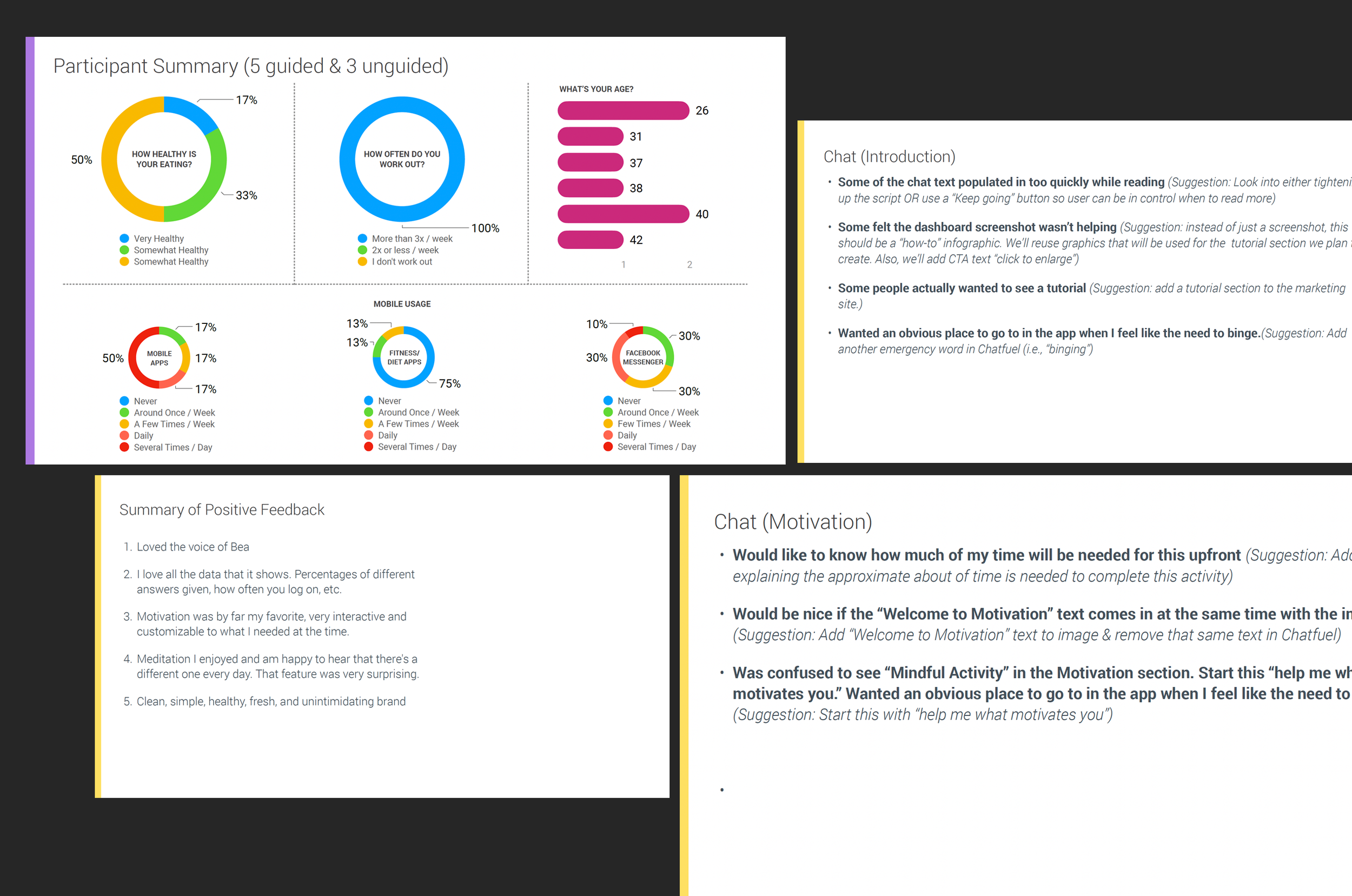
After multiple rounds of prototype testing, we synthesized findings and prepared Bea for full development.
Validated therapeutic model: Hypnosis and Ericksonian tone resonated strongly, building trust quickly.
User feedback: Participants described Bea as “comforting,” “understanding,” and “non-judgmental.”
Interface clarity: Simplifying flows and language improved users’ sense of safety and reduced overwhelm.
Technical foundation: Established analytics pipeline and AI architecture for longitudinal tracking in the next phase.
Next step: Begin controlled rollout and post-launch data monitoring to for potential engagement and retention refinements.
Design & Validation Insights
Begin controlled rollout and post-launch data monitoring to for potential engagement and retention refinements.
Next Steps:
Bea’s early design phase proved that clinical hypnosis can scale digitally without losing empathy and was absolutely filling a gap in the wellness space. (Note that this phase was completed before OpenAI became available for public use, and agentic-AI was not widely used.)
Through careful testing and iterative design, we transformed a therapeutic framework into an accessible, human-centered product.
This groundwork—psychological, technical, and empathic—set the stage for Bea’s next chapter: nine months of data-driven iteration and retention improvement.
REFLECTION
MORE BEA CASE STUDIES
Validating Bea’s 15-Day Challenge
Monitoring, Metrics & Iteration (9 Months Later)